YuMuuv
Summary
At YuMuuv, I served as Founding Product Designer — taking a wellness SaaS from a broken outsourced MVP to a globally scaled platform with €1.04M ARR, 208,000+ users across 100+ countries, and G2 market leadership. I led 0-to-1 product design, built a scalable design system, and drove a strategic post-COVID pivot that increased retention and engagement and enabled faster, higher-quality delivery.
- Role
- Founding Product Designer
- Scope
- End-to-end product design, design system, brand, sales enablement, and investor materials
- Highlights
- 0-to-1 MVP, design system, COVID-era pivot, measurable engagement and sales uplift, G2 market leadership
Context & Challenge
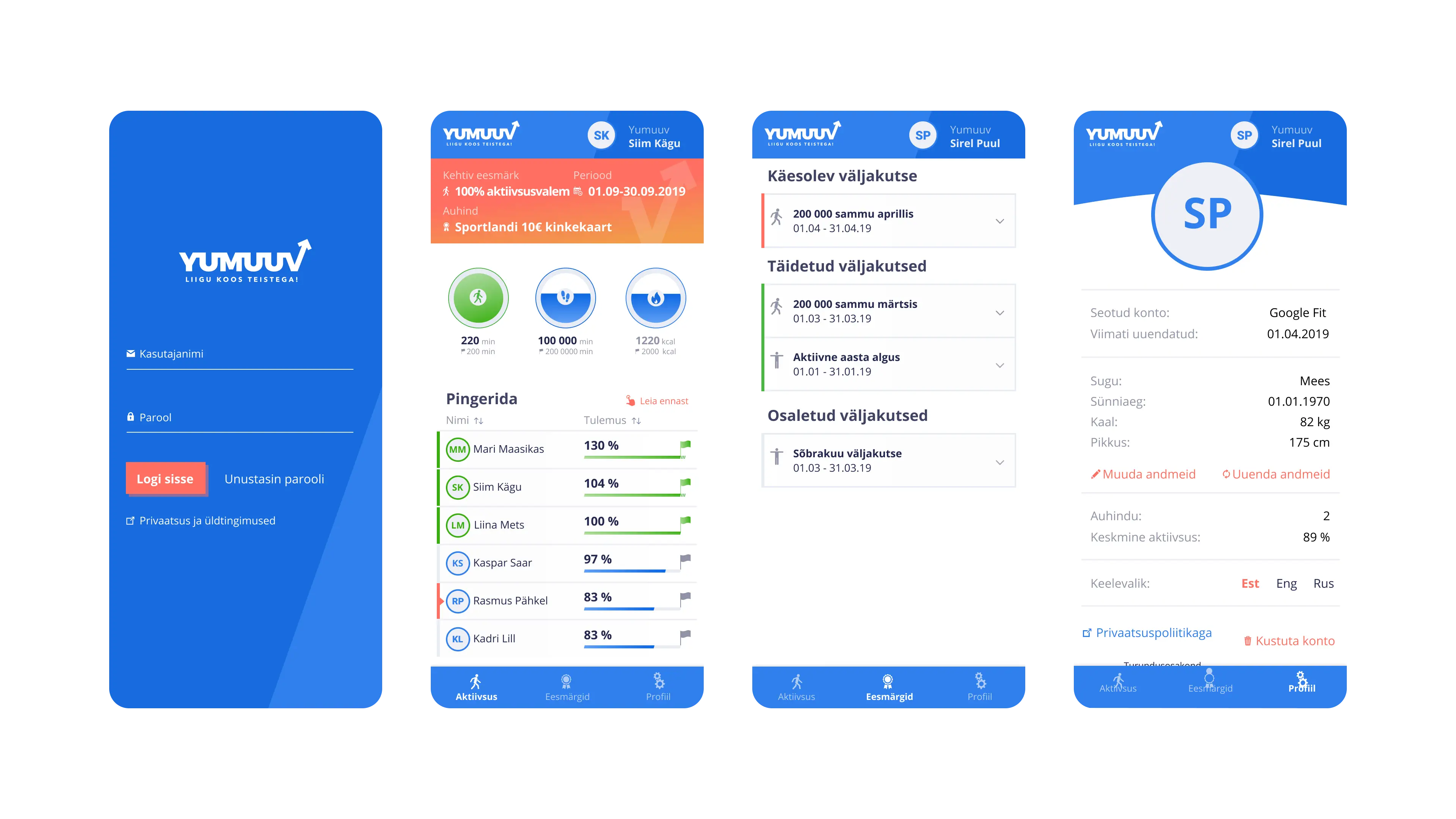
YuMuuv set out to build a wellness SaaS that helps organizations run activity challenges and improve employee health. The initial challenge was to launch a credible MVP quickly, while still laying foundations for a scalable, high-quality product.
In 2020, COVID fundamentally changed how companies approached wellness and remote work. The product needed to pivot from a simple activity tracker into a more engaging, gamified experience that could sustain motivation and support remote teams at scale.
My Role & Responsibilities
As the founding designer, I:
- Led the 0-to-1 product design from idea to launched MVP, including UX, UI, and brand
- Built and maintained the design system and documentation
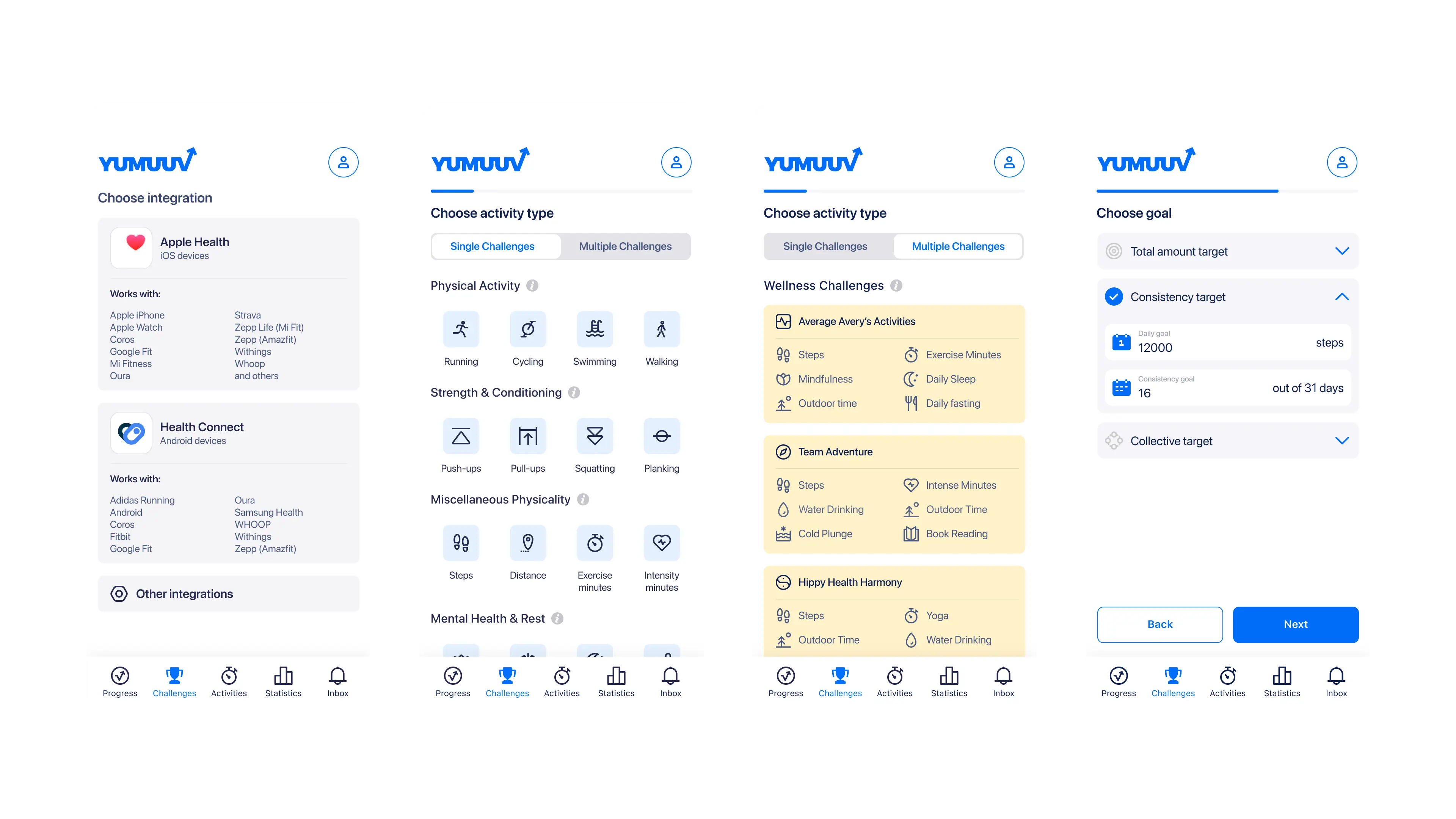
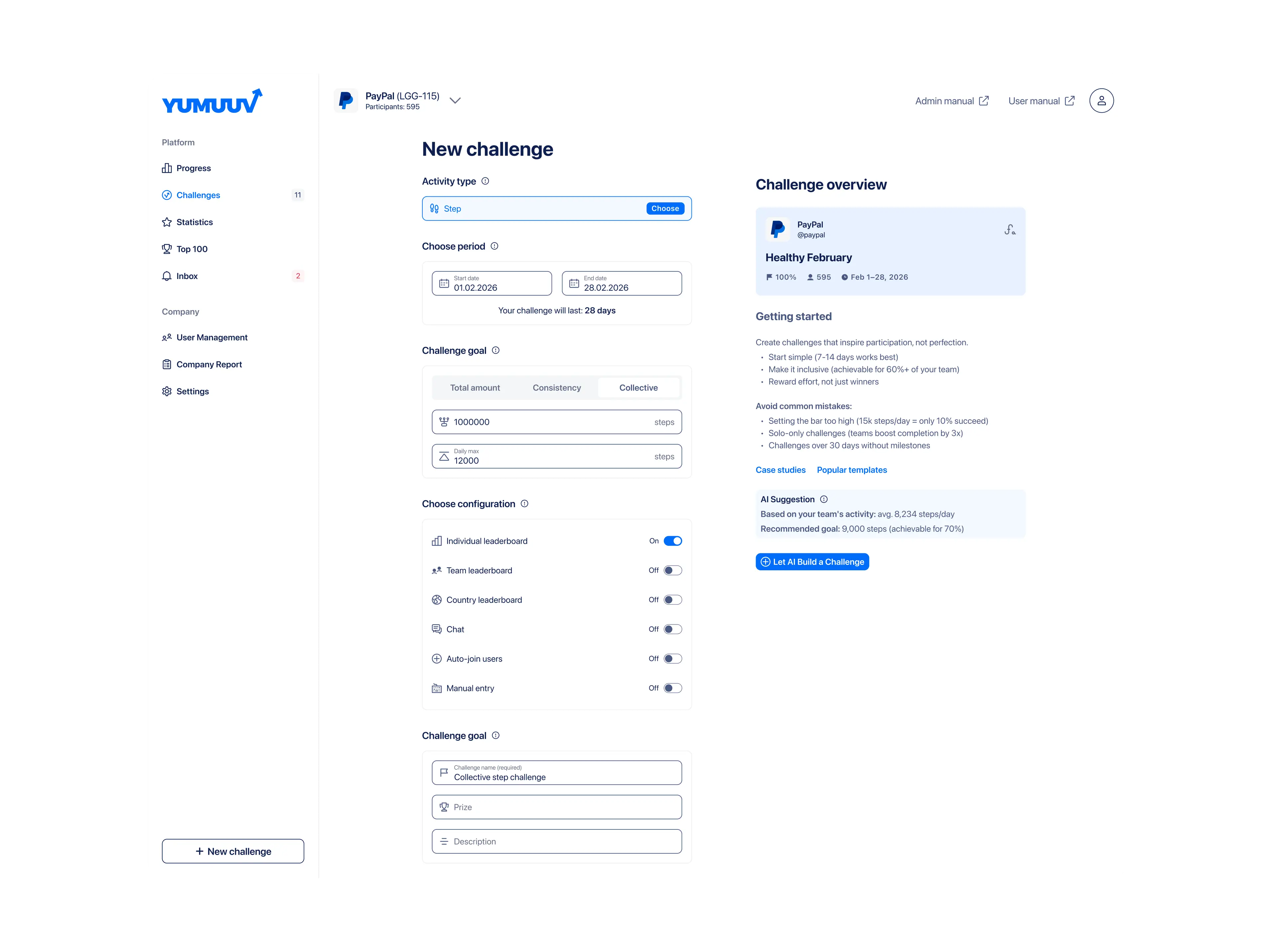
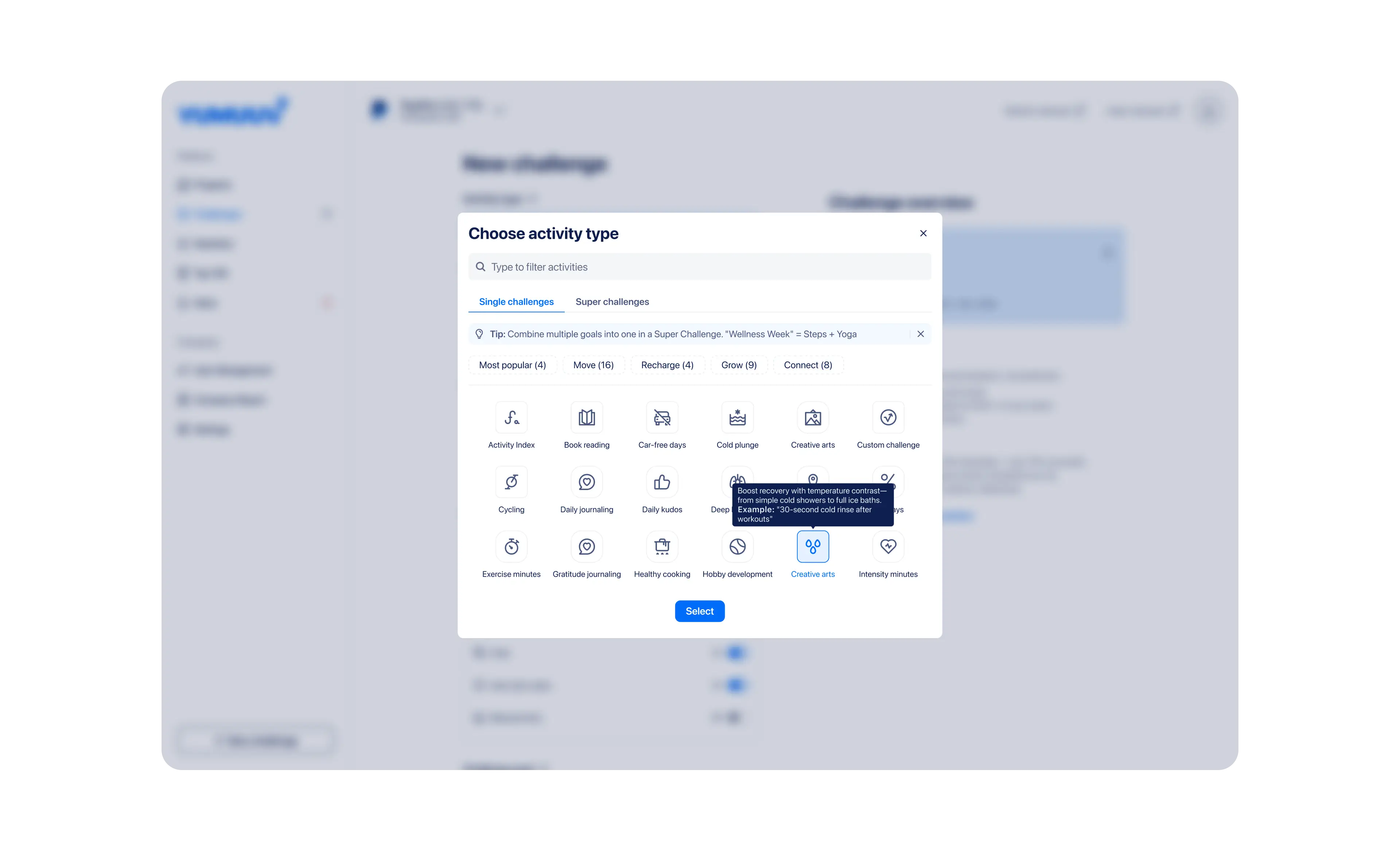
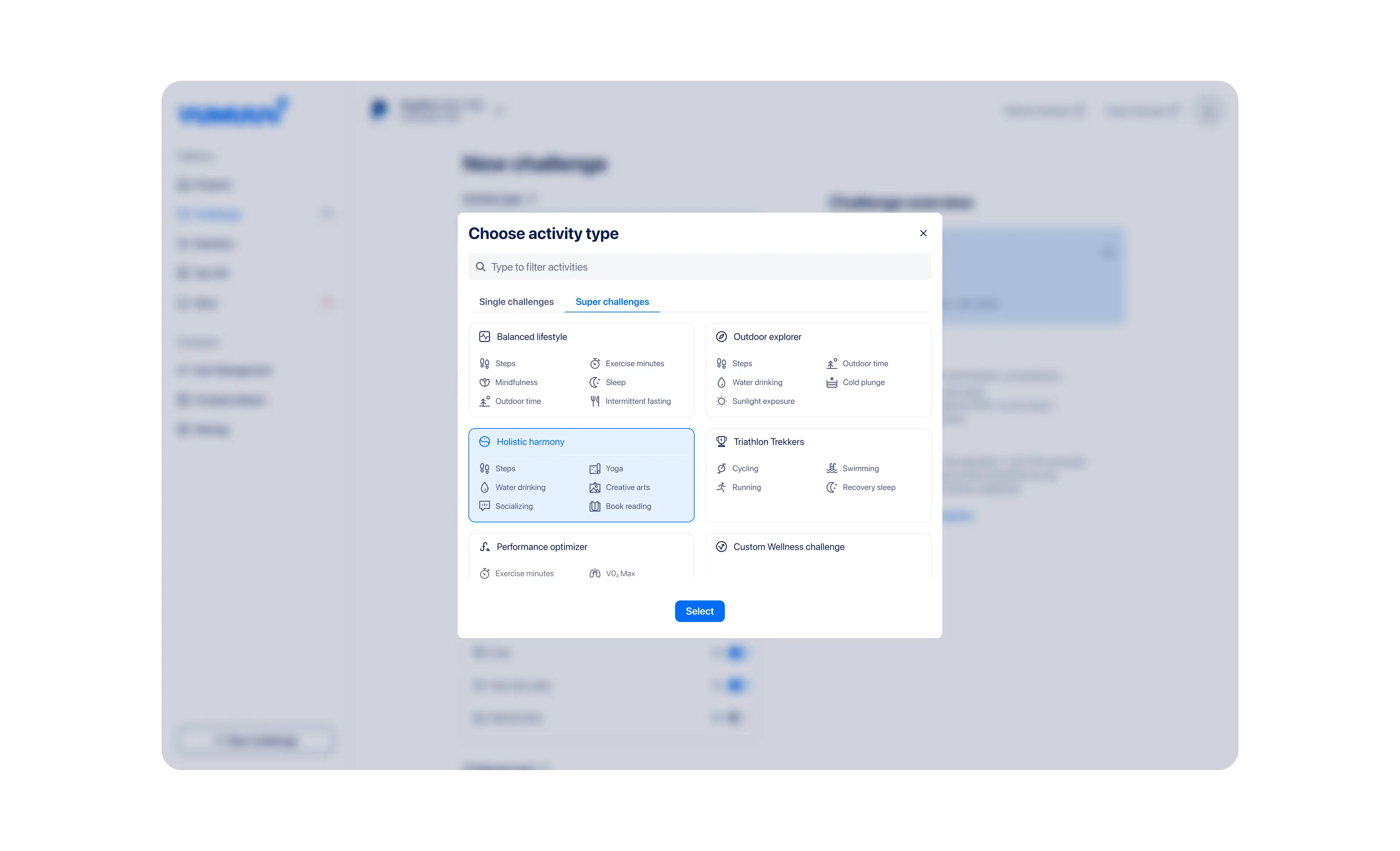
- Designed core product experiences: challenge creation, participant experience, multi-criteria challenge logic, and analytics
- Partnered closely with the founding team on product strategy, pricing, and positioning
- Created sales and investor materials, contributing directly to commercial performance and fundraising
Since mid-2023, I have continued in a part-time advisory capacity, supporting strategic product decisions while the operational team runs day-to-day design.
Approach
1. Building an MVP that could scale
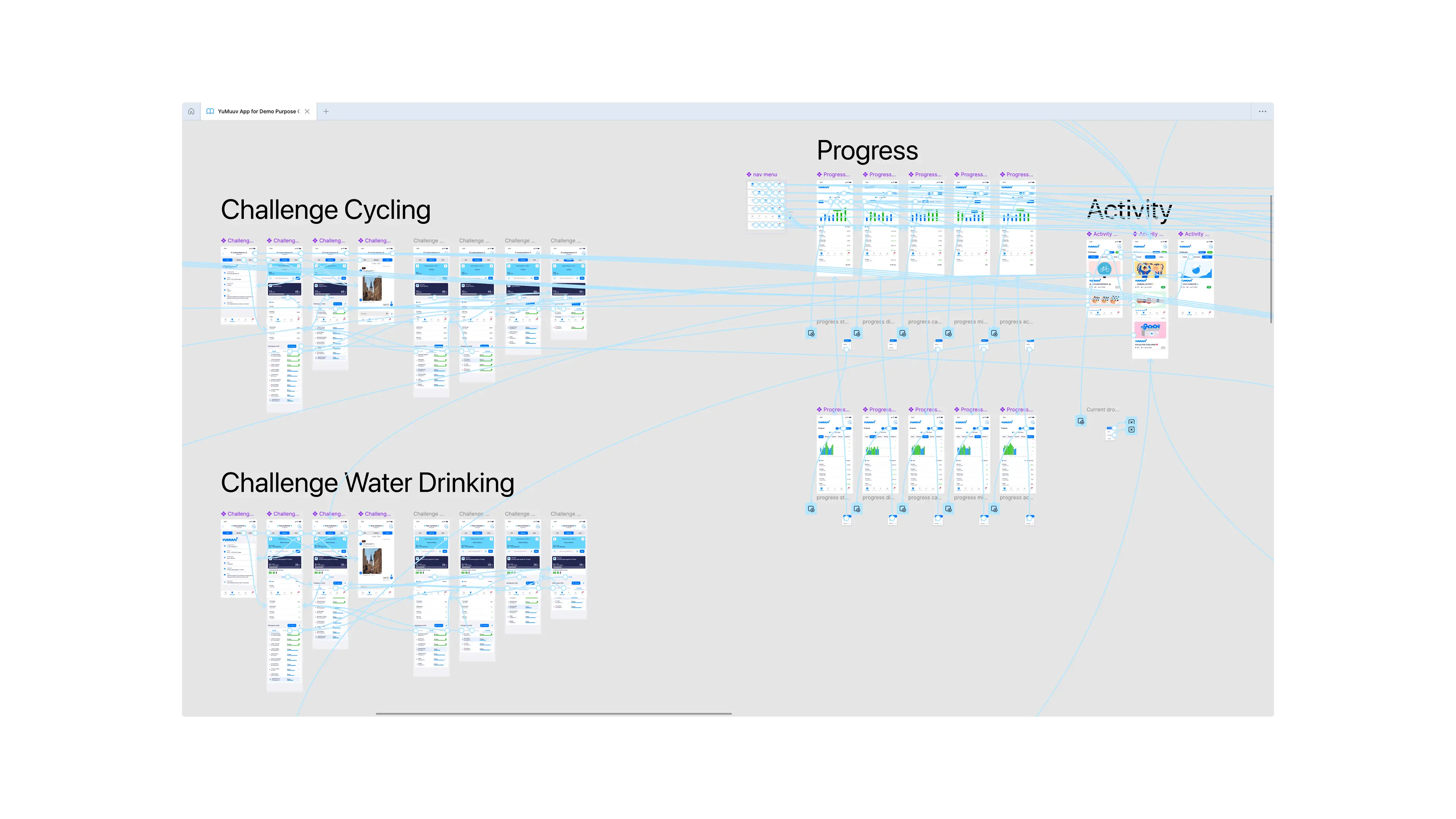
- Designed and shipped an MVP in three months, establishing consistent UX patterns and a visual language that could support new features without heavy redesign
- Built the design system upfront — ensuring quality and enabling rapid iteration from day one
2. Creating a differentiated wellness experience
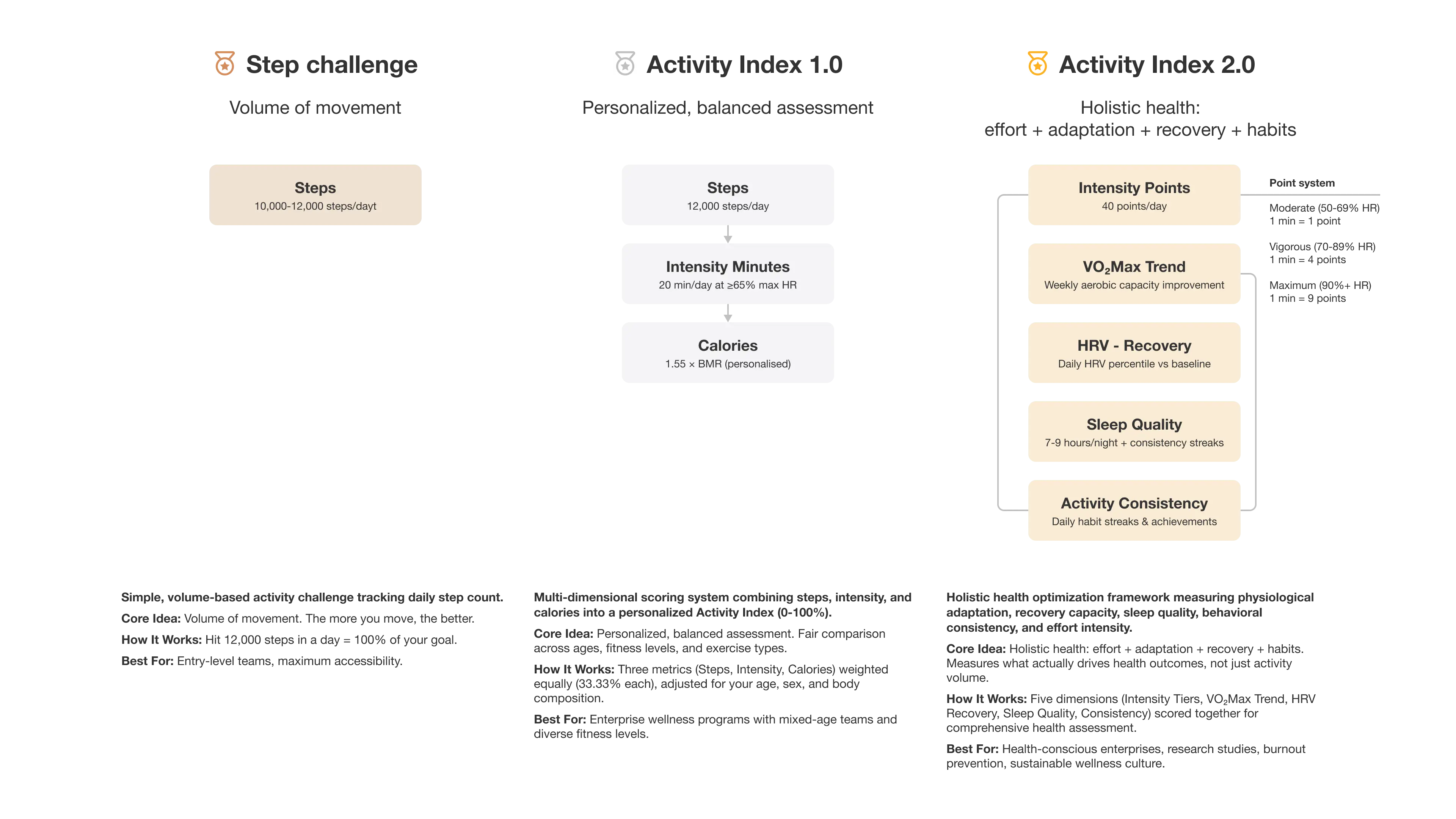
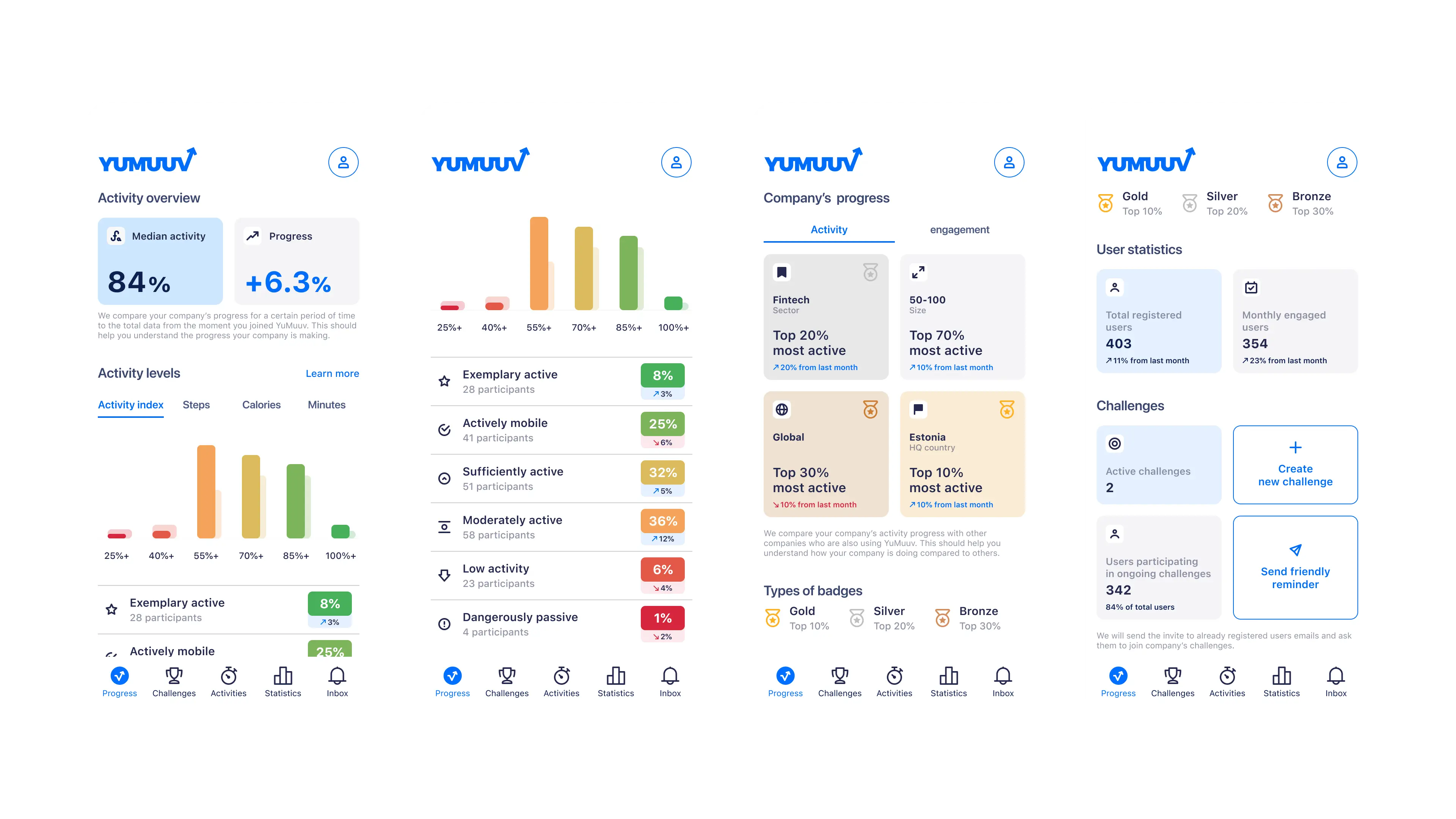
- Designed the proprietary Activity Index, a scientific wellness metric synthesising WHO research, biometric data, and peer-reviewed science — positioning YuMuuv as more than a simple step counter
- Developed a complex multi-criteria challenge system that became a key competitive differentiator, allowing organisations to tailor challenges to their goals and culture
3. Post-COVID pivot to engagement and gamification
- Led a strategic product pivot in 2020 to focus on gamification, engagement, and social features
- Redesigned the UI to be more playful and motivating; introduced peer chat and AI-powered progress highlights to sustain user engagement over time
4. Scaling delivery through design systems and workflows
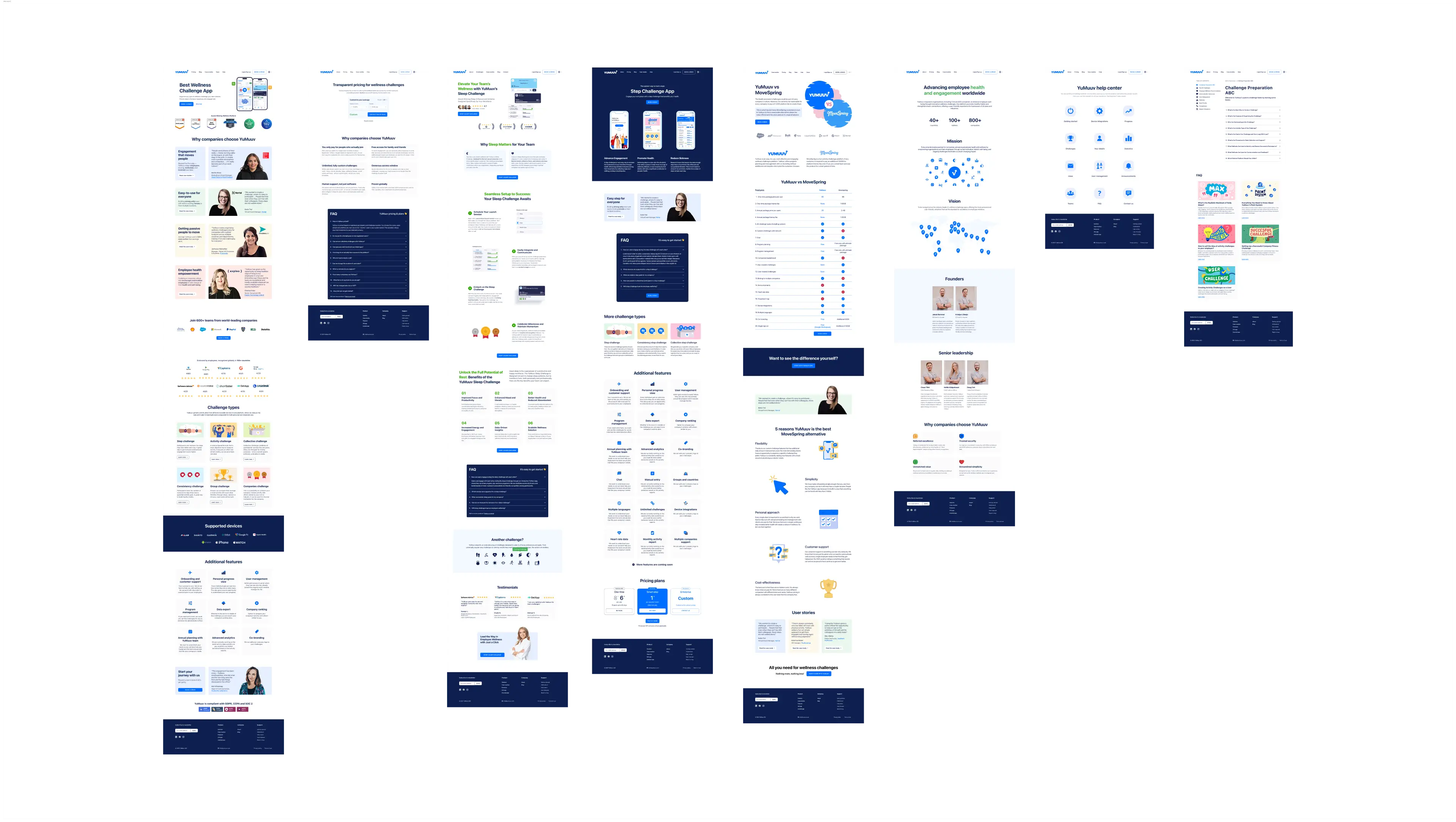
- Architected a Figma design system with an atom-based structure and full documentation
- Enabled 4+ feature releases per year without degrading quality, by standardising patterns and handoff processes
5. Enabling sales and fundraising
- Designed a dedicated sales enablement app prototype, streamlining how sales teams demonstrated the product; the following month saw 82% more sales compared to the month prior
- Crafted investor pitch decks and supporting visuals, contributing to a €550K seed fundraising round
Impact
Business growth: Helped grow YuMuuv to €1.04M ARR, 208,000+ users, across 100+ countries.
Engagement & retention: The gamification-focused redesign and new social features increased monthly retention and engagement — the platform reached the top of the Health category on the iOS App Store in Estonia within 6 months of launch.
Delivery velocity: The design system and standardised workflows supported 4+ quality feature releases per year without degrading design quality.
Sales & funding: The sales enablement app prototype drove an 82% increase in sales the following month. Investor materials supported a €550K seed round.
Market recognition: YuMuuv achieved G2 Leadership (Winter 2026), ranking at the top across multiple categories including the Results Index, Usability Index, and Implementation Index, across all regions and company sizes.
Future Direction — AI Integration
The following screens represent a collaborative design vision explored with the YuMuuv team — not a shipped product.
During my time working closely with the founding team, we explored how AI could evolve YuMuuv from a challenge platform into a truly intelligent wellness system. The screens below represent a design vision the team developed — not yet shipped to production, but grounded in real product thinking, user research, and business goals. The goal was to show what the platform could become, and to validate the direction with stakeholders.
From Activity Tracking to Business Intelligence
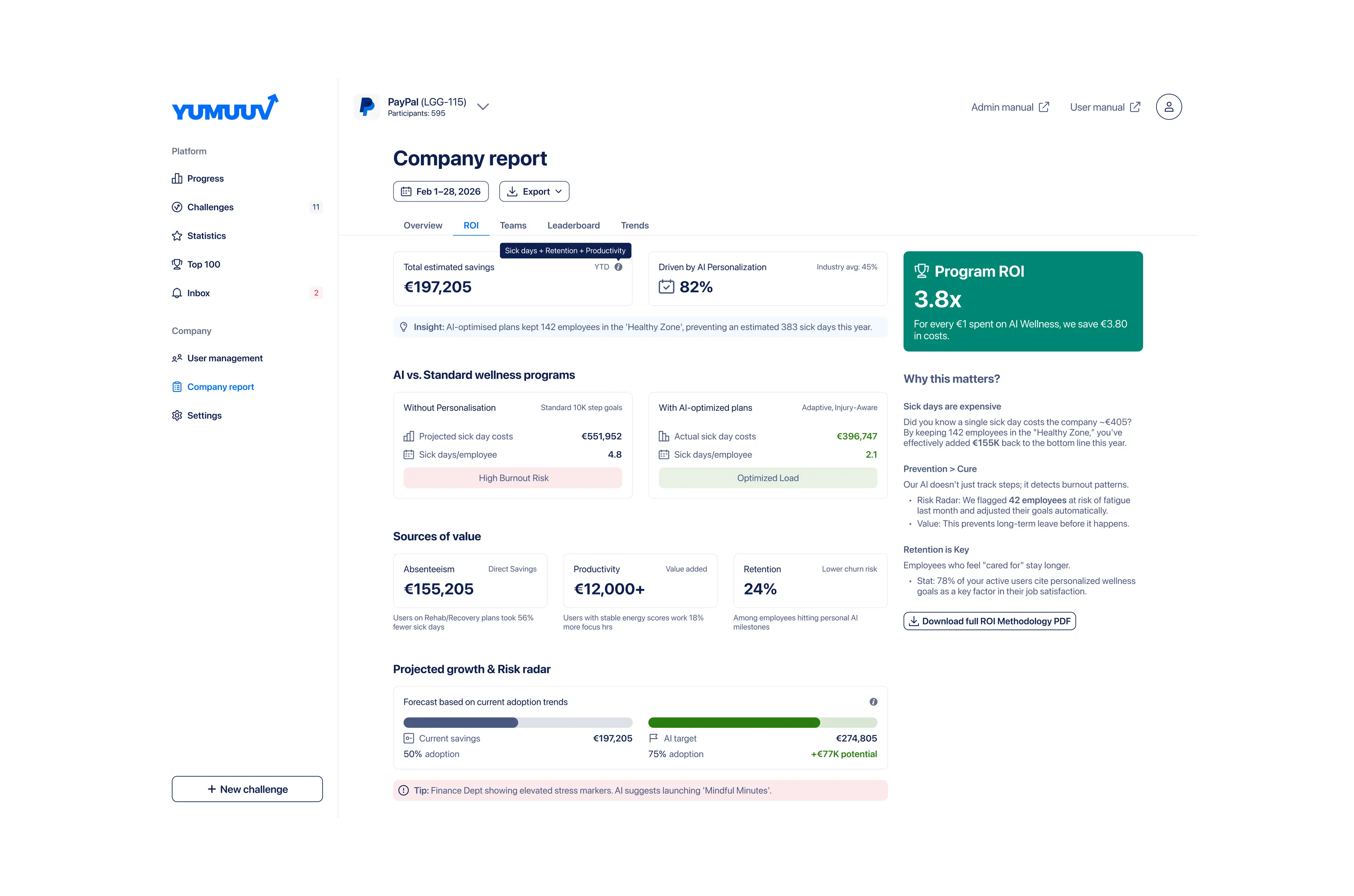
The most significant design challenge was translating individual wellness data into language that HR leaders and CFOs actually care about. The redesigned Company Report introduces a dedicated ROI tab that makes the business case for wellness programs explicit and measurable.
Rather than presenting steps and calories in isolation, the dashboard surfaces three value drivers: Absenteeism savings (€155K+ in direct sick day reduction), Productivity gains (users with stable energy scores working 18% more focused hours), and Retention impact (24% lower churn risk among employees hitting personal milestones). The headline figure — a 3.8× program ROI — gives decision-makers a single number to anchor budget conversations.
The AI vs. Standard Programs comparison panel was a deliberate design decision: showing the counterfactual (what happens without AI personalization) made the value of the intelligent layer concrete rather than abstract.
AI Personalization as a Trust Layer
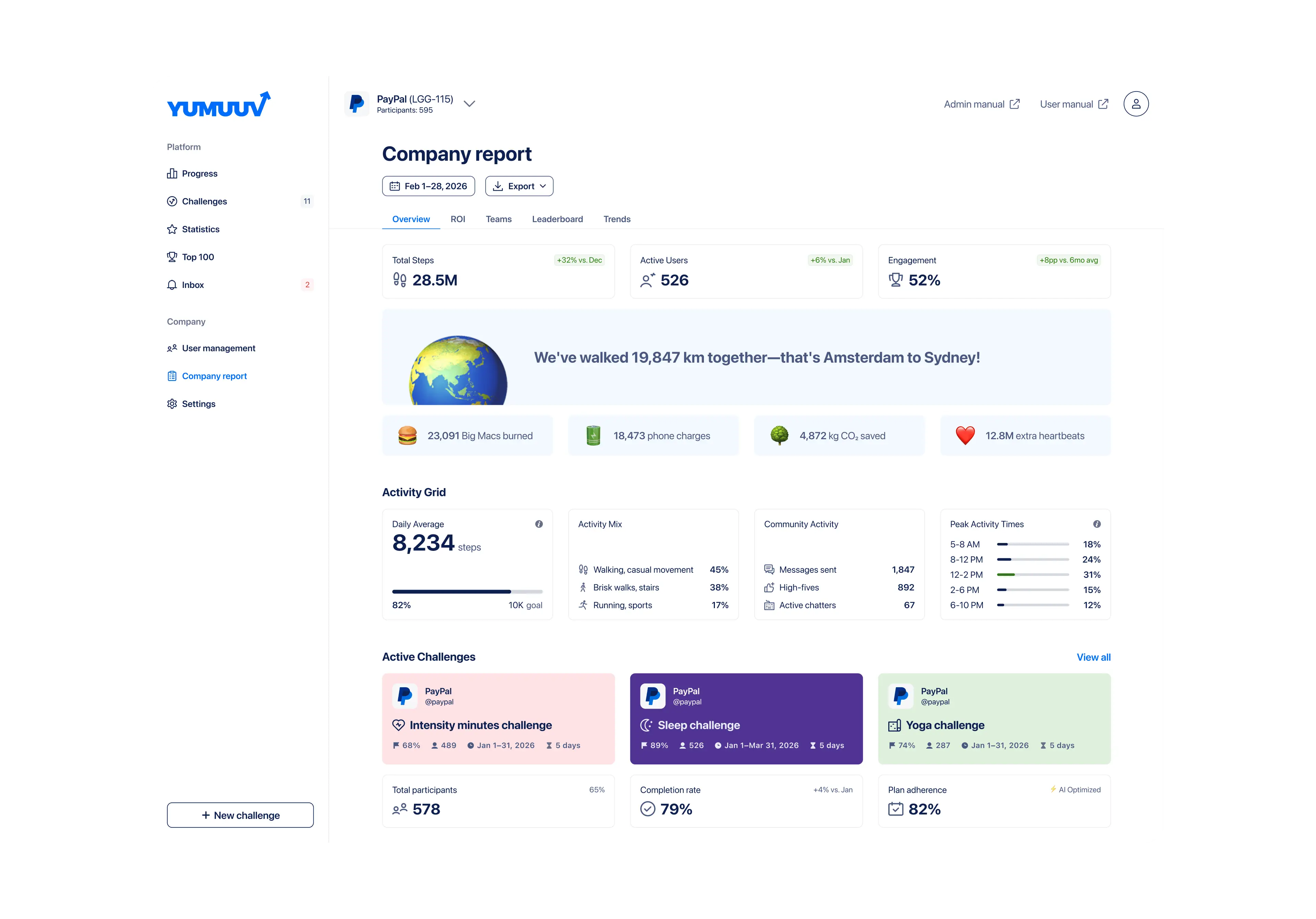
One of the core design principles was that AI should feel helpful, not opaque. The platform's AI features are surfaced through contextual signals — an "AI Optimized" badge on plan adherence, a Risk Radar that flags employees showing fatigue patterns, and personalized challenge recommendations — rather than as a separate AI dashboard.
The 82% personalization-driven engagement metric (versus a 45% industry average) appears as a headline stat in the overview, directly tied to the AI layer. This reinforces the product's core promise: that personalization isn't a feature, it's the mechanism behind the business results.
The Projected Growth & Risk Radar section extends this further — forecasting savings trajectory from 50% to 75% adoption (+€77K potential), and surfacing department-level alerts (e.g., "Finance Dept showing elevated stress markers") to prompt proactive action from HR admins.
Redesigning the Challenge Experience
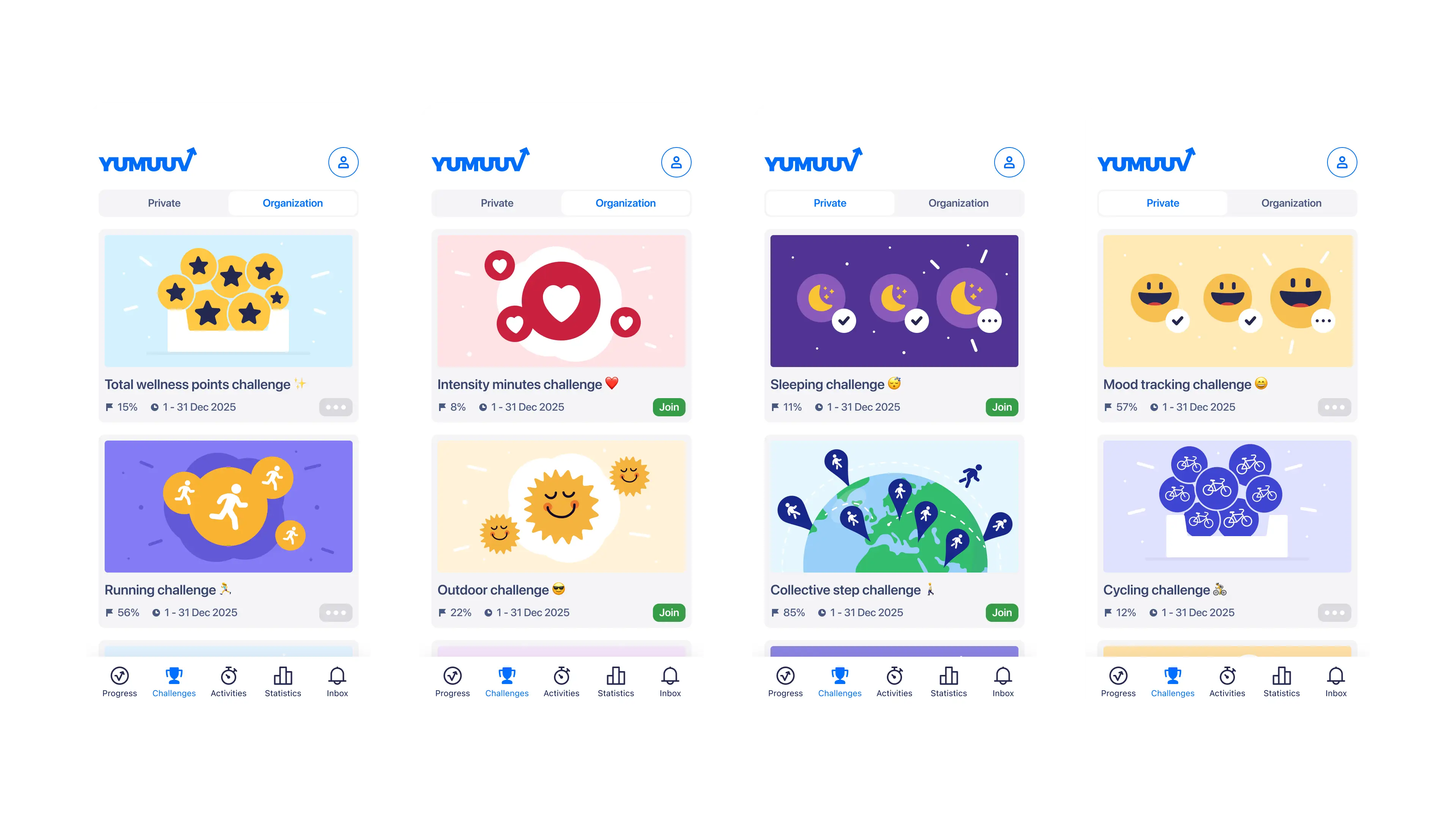
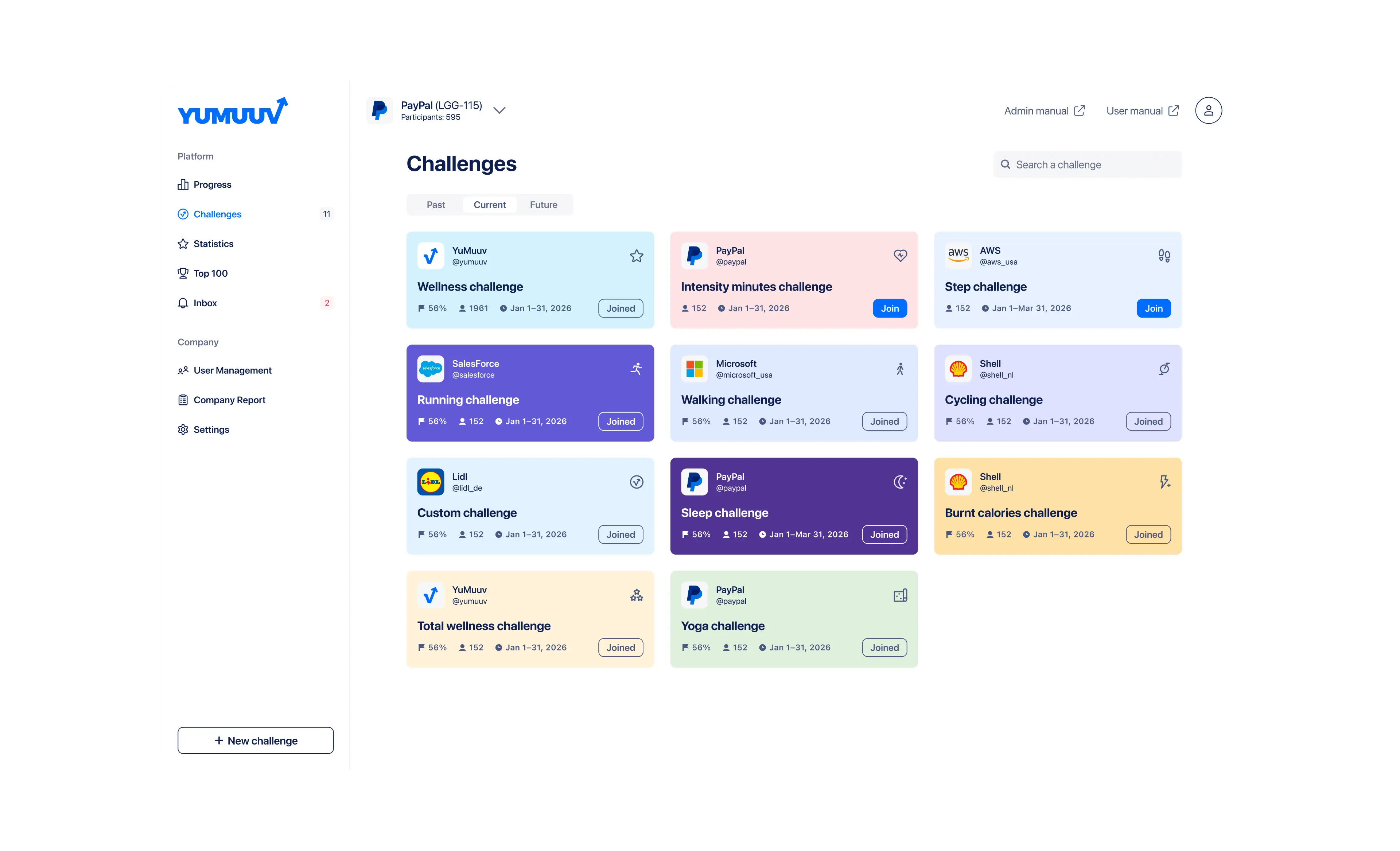
Alongside the analytics work, we explored a more visually expressive challenge card system — moving away from a data-dense list toward color-coded, brand-attributed cards that make the multi-company, multi-challenge structure immediately legible at a glance.
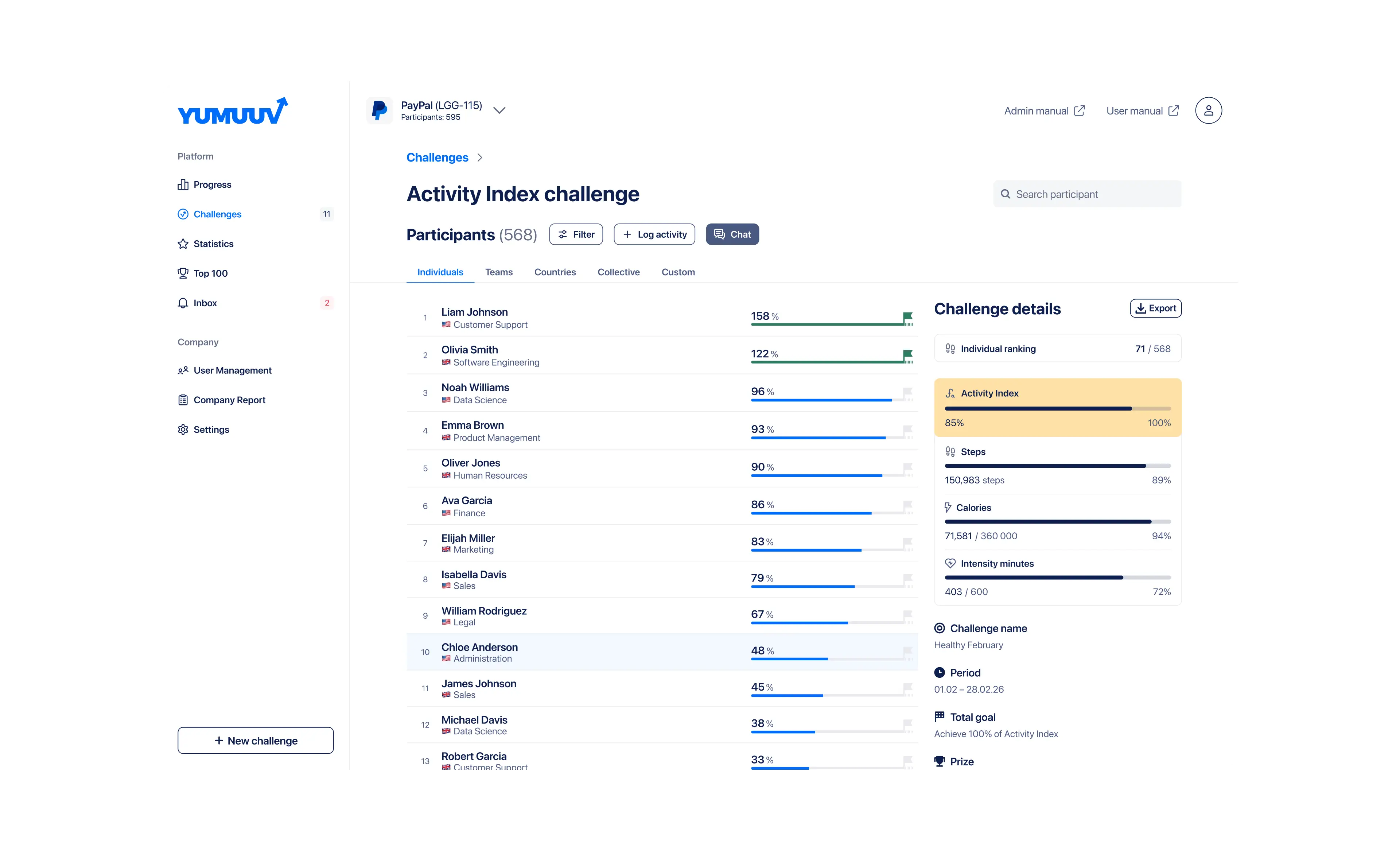
The Activity Index challenge detail view extended this thinking to the individual level: a leaderboard with percentage-based progress bars, broken down by metric (Steps 89%, Calories 94%, Intensity Minutes 72%), giving participants a nuanced view of their performance rather than a single rank. This design was directly inspired by the scientific multi-criteria model behind YuMuuv's proprietary Activity Index.
Design Reflection
This vision work served two purposes: it gave the team a shared picture of where the product was heading, and it helped us evaluate feasibility and priority with engineering early. Designing these screens forced us to define what "AI" actually meant in the context of wellness — not a black box, but a layer of personalization, prediction, and plain-language explanation that makes the product meaningfully smarter for both admins and participants.